
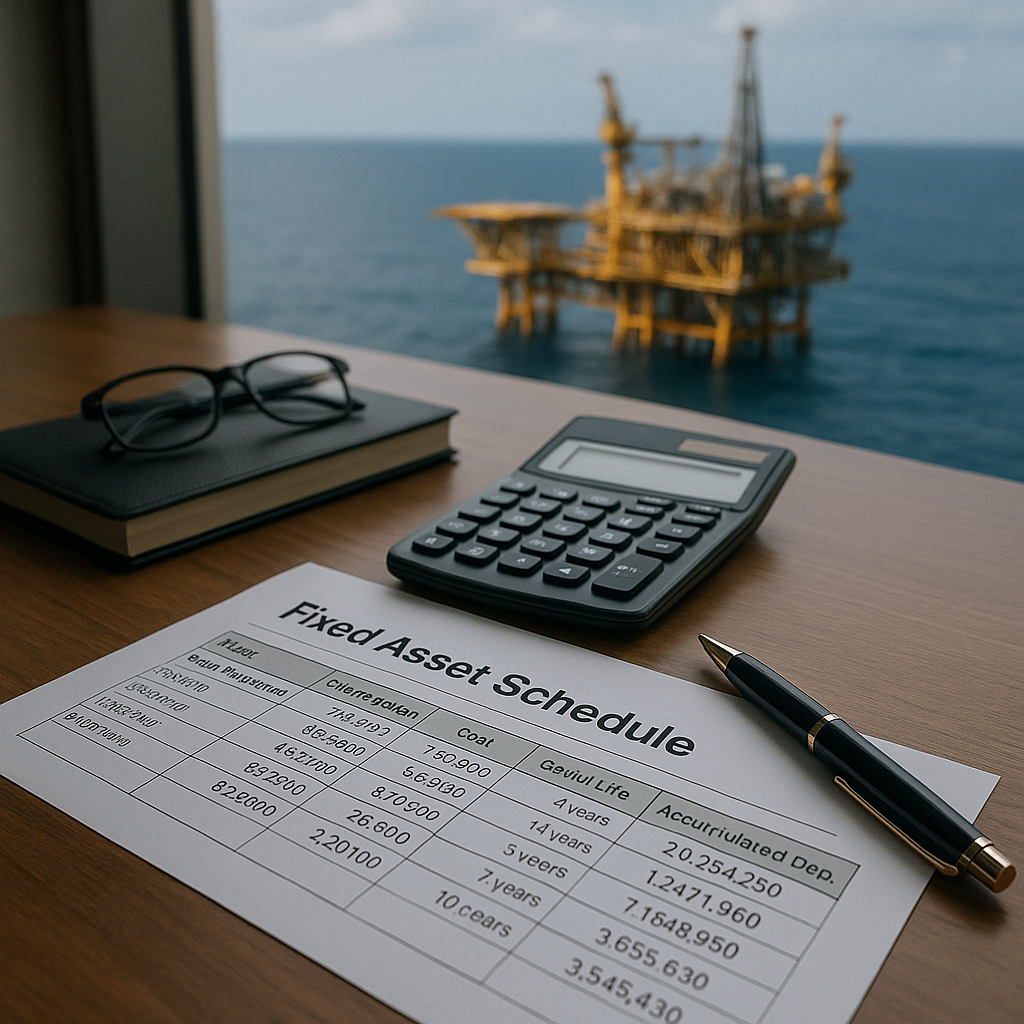
Fixed Asset Schedules: The Offshore Detail That Can Cost Australian Businesses
Introduction
You’re running an Australian business. You’ve outsourced some accounting work overseas, maybe to save on costs or get faster turnaround. But then, out of nowhere, your auditor flags a problem: the Fixed Asset Schedule doesn’t add up. Suddenly, you’re scrambling to fix a spreadsheet that underpins your tax, your management reporting, and your compliance. If you’ve ever trusted an offshore fixed asset schedule Australia provider without double-checking their work, you know the anxiety that follows.
This isn’t just about a few wrong numbers. A badly handled offshore asset register can trigger tax compliance headaches, misstate your accounts, and even bring ATO penalties. The detail in these schedules – depreciation rates, asset lives, GST credits – matters. The wrong detail can cost real money. Here’s how, why, and what you should do about it.
Quick Answer
An offshore fixed asset schedule Australia is a detailed register of business assets, often prepared by offshore accounting services for Australian companies. If not aligned with Australian tax laws and accounting standards, errors in these schedules can cause tax compliance issues, misreported financials, and costly penalties. Always ensure offshore providers follow ATO rules, use correct depreciation methods, and provide audit-ready documentation.
What Is an Offshore Fixed Asset Schedule for Australian Businesses?
A fixed asset schedule is a detailed list of all a business’s property, plant, and equipment – think computers, vehicles, machinery – showing how much each asset cost, its useful life, accumulated depreciation, and current book value. In Australia, this schedule is essential for:
– Financial reporting (for annual accounts and audits)
– Tax preparation (for depreciation deductions and capital gains)
– BAS preparation (for GST claims on asset purchases)
When you use offshore accounting services for this, you’re trusting someone outside Australia to handle a document that affects your tax, compliance, and even your cashflow. Often, offshore teams work with cheaper labour and different tax systems, so it’s easy for them to miss local rules.
What Goes Into a Fixed Asset Schedule?
A typical schedule should include:
– Asset name and description (e.g., Toyota Hilux Ute, serial 1234)
– Acquisition date and cost
– Depreciation method (straight-line, diminishing value)
– Useful life (e.g., 5 years for IT equipment)
– Accumulated depreciation
– Net book value
– GST claim status
– Disposal information, if sold or scrapped
Why Offshore? The Pros and Cons
Many Australian businesses outsource bookkeeping services and asset register work offshore for:
– Lower hourly rates
– 24/7 turnaround
– Access to large teams and technology
But offshore teams may lack:
– Familiarity with Australian tax law (ATO rules, GST, small business depreciation pools)
– Understanding of local reporting deadlines
– Experience with Australian audit requirements
Honestly, the savings can disappear fast if you have to redo the work, face ATO queries, or pay extra tax.
Compliance Risks: What Can Go Wrong with Offshore Asset Schedules?
Outsourcing your asset register isn’t a problem by itself. The risk comes when the schedule doesn’t match what the ATO or your auditor expects. Here are the most common traps:
1. Depreciation Calculations That Don’t Match ATO Rules
Australian tax law allows two main depreciation methods:
– Diminishing value
– Prime cost (straight-line)
Offshore teams sometimes use international or default software settings instead of the specific rates set by the ATO. The wrong rate means your tax deduction is either too high (risking penalties) or too low (leaving money on the table).
2. GST and BAS Errors
Fixed asset purchases often include GST, which you can claim back. But the schedule must show which assets had GST, how much was claimed, and match the BAS preparation records. Offshore bookkeepers sometimes:
– Miss GST status for second-hand goods
– Fail to split GST and non-GST amounts
– Ignore GST on disposals
3. Asset Pooling and Small Business Concessions
Australian small businesses can use simplified depreciation pools (Instant Asset Write-Off, Small Business Pool). Offshore providers may not apply these correctly, especially if they’re used to US or UK standards.
4. Disposals and Capital Gains
Selling or scrapping assets is tricky. The schedule should track:
– Date and sale price
– Written down value at disposal
– GST on sale
– Any capital gain or loss
If offshore teams miss these, your financial reporting and tax return will be wrong.
5. Audit Trails and Documentation
Auditors want to see:
– Original invoices or contracts
– Asset location and serial numbers
– Proof of disposal
If your offshore schedule doesn’t link to these documents, you could face a lengthy audit or even a qualified opinion.
Australian Tax Rules and Accounting Standards You Can’t Ignore
Getting the offshore team to follow Australian rules isn’t just about ticking boxes – it’s about legal compliance. Here’s what matters most:
Australian Accounting Standards
For most private companies, the relevant standards are:
– AASB 116 (Property, Plant and Equipment)
– AASB 13 (Fair Value Measurement)
– AASB 1054 (Australian Additional Disclosures)
These standards require:
– Accurate cost and fair value reporting
– Consistent depreciation methods
– Disclosure of asset movements (additions, disposals, depreciation)
Australian Tax Law: Depreciation and Capital Allowances
The ATO sets out depreciation rules in Division 40 and Division 328 of the Income Tax Assessment Act 1997. Key points:
– Instant Asset Write-Off: Small businesses can claim full deduction for assets under a threshold (varies by year)
– Small Business Pool: Depreciate assets at set rates (15% first year, 30% thereafter)
– Effective Life: Use ATO tables or self-assess
– Balancing Adjustments: Required when assets are sold or scrapped
GST and BAS Preparation
- GST credits can only be claimed if you hold a valid tax invoice
- Asset disposals must be reported in the BAS if GST applies
- Private use adjustments may be needed
Audit and Documentation Requirements
- Keep all supporting documents for five years
- Asset register should reconcile to the general ledger
- Disposals must be documented with sales contracts or scrap evidence
Real-World Scenarios: Where Offshore Fixed Asset Schedules Go Wrong
Let’s look at some situations that catch Australian businesses off guard.
Example 1: Software Default Depreciation
A Sydney retailer outsources their bookkeeping and fixed asset register to Manila. The offshore team uses straight-line depreciation for all assets, but the ATO requires diminishing value for certain equipment. At tax time, the deduction is $15,000 lower than it should be.
Example 2: Missing GST on Disposal
A construction firm sells a truck. The offshore asset schedule records the sale, but forgets to include GST. Their BAS is under-reported, and the ATO demands back-payment plus interest.
Example 3: No Audit Trail
A tech startup’s offshore asset register lists laptops, but there are no serial numbers or purchase invoices attached. During audit, the company can’t prove ownership, and the auditor qualifies the accounts.
Example 4: Incorrect Small Business Pooling
A family-owned cafe doesn’t use the small business pool rules because their offshore provider isn’t aware. They miss out on accelerated depreciation, paying extra tax for two years.
How to Check If Your Offshore Fixed Asset Schedule Is Audit-Ready
Don’t assume your offshore provider knows Australian rules. Use this checklist to review their work:
- Are depreciation methods and rates consistent with ATO rules?
- Is GST correctly recorded on all acquisitions and disposals?
- Does the schedule match your general ledger and BAS records?
- Are all asset disposals fully recorded, with dates, sale prices, and GST?
- Are supporting documents (invoices, contracts, serial numbers) attached or linked?
- Is the schedule updated for new purchases and disposals promptly?
- Are small business concessions applied where eligible?
If you answer “no” to any, you’re at risk of compliance issues.
Best Practices for Managing Offshore Fixed Asset Schedules in Australia
A little extra work upfront can prevent a lot of pain later. Here’s how to make offshore asset schedules work for you, not against you.
1. Set Clear Instructions and Templates
Give your offshore team:
– Australian-specific depreciation templates
– Instructions on GST treatment for assets
– Examples of correct asset pooling
2. Use Cloud Accounting Software With Local Settings
Platforms like Xero, MYOB, and QuickBooks Online support Australian tax rules. Make sure your offshore provider is using these, with the correct settings for your business.
3. Regularly Reconcile Asset Register to General Ledger
Every quarter, match the asset schedule totals to your GL. Look for missing assets, disposals, or depreciation entries.
4. Keep Source Documents Accessible
Store all invoices, contracts, and supporting docs in a shared cloud folder. Link these to each asset in the schedule.
5. Schedule Local Reviews Before Tax Time
Have your local accountant or bookkeeper review the offshore-prepared schedule before submitting your tax return or BAS. They’ll spot errors that offshore teams might miss.
6. Train Offshore Teams in Australian Compliance
Offer regular training on:
– ATO depreciation rules
– GST for assets
– Small business concessions
It’s worth the investment if you rely on offshore support.
How Offshore Accounting Services Can Support (or Sabotage) Your Compliance
There’s nothing wrong with using offshore accounting services for routine work. The problem comes when they don’t know Australian rules, or you don’t give them enough guidance. Here’s what a good offshore partner should do:
- Use Australian accounting standards and ATO tax rates
- Provide schedules in formats accepted by your auditor
- Reconcile asset registers with your accounts payable records
- Flag any transactions that might need local review
But if they:
– Use international templates
– Ignore GST or pooling rules
– Don’t attach supporting documents
– Deliver files that don’t match your general ledger
…then you’re taking on unnecessary compliance risk.
Offshore vs Local Fixed Asset Schedules: A Comparison Table
| Feature | Offshore (Inexperienced) | Offshore (Local-Trained) | Local Australian Provider |
|---|---|---|---|
| Follows ATO Depreciation Rules | Sometimes | Usually | Always |
| GST Treatment | Often inconsistent | Correct if trained | Always correct |
| Small Business Pooling | Rarely applied | Applied if instructed | Always applied |
| Document Attachment | Seldom | Sometimes | Always |
| Audit Trail | Weak | Can be strong | Strong |
| Cost per Hour | Low | Low-Moderate | High |
| Risk of ATO Penalties | High | Moderate | Low |
Key Tax and Compliance Deadlines for Asset Schedules in Australia
- Year-End Financial Reporting: Usually June 30 for most companies. Asset schedules must be finalised and reconciled.
- Tax Return Lodgement: Companies usually have until 15 May (if using a tax agent) to lodge annual returns and claim depreciation.
- BAS Lodgement: Quarterly or monthly, depending on turnover. Asset acquisitions and disposals must be included in relevant periods.
- Audit or Review: If required, auditors will request asset schedules and supporting documents as part of their fieldwork.
Missing these deadlines due to incorrect asset schedules can mean late lodgement penalties, interest, and even audit adjustments.
Frequently Asked Questions
What is an offshore fixed asset schedule for Australian businesses?
An offshore fixed asset schedule is a register of business assets prepared by an overseas accounting team for an Australian business. It must follow Australian tax law, accounting standards, and include details like cost, depreciation, and GST.
What are the risks of using offshore providers for asset schedules?
Risks include incorrect depreciation rates, missing GST details, failure to apply small business pooling, and lack of audit documentation. These errors can result in extra tax, ATO penalties, or audit qualifications.
How do I check if my fixed asset schedule is ATO-compliant?
Check that depreciation rates match ATO rules, GST is recorded for each asset, disposals are correctly shown, and all entries are supported by invoices or contracts. Reconcile the schedule to your general ledger and BAS records.
What depreciation methods are allowed in Australia?
Australian tax law allows diminishing value and prime cost (straight-line) methods. The ATO provides tables for effective life. Small businesses may use simplified pooling or instant asset write-off if eligible.
Can I claim GST on all fixed assets?
You can claim GST credits on most business asset purchases if you hold a valid tax invoice and the purchase is for business use. Some assets (e.g., private use, second-hand goods) may have special rules.
What happens if I use the wrong depreciation rate?
If you use a rate not allowed by the ATO, you may over- or under-claim depreciation. Over-claiming can lead to tax penalties and interest. Under-claiming means you pay more tax than necessary.
How should disposals be recorded in the asset schedule?
Disposals must show date, sale price, written down value, GST on sale, and any capital gain or loss. Retain supporting documents like sales contracts or evidence of scrapping.
What should an audit-ready fixed asset schedule include?
An audit-ready schedule should list all assets with purchase date, cost, depreciation method, accumulated depreciation, net book value, GST status, and supporting documents attached or linked.
What accounting standards apply to fixed asset schedules in Australia?
AASB 116 (Property, Plant and Equipment) and AASB 13 (Fair Value Measurement) are the main standards. These require accurate cost, depreciation, and disclosure of asset movements.
How often should I review my offshore fixed asset schedule?
Review quarterly to catch errors early, and always before year-end accounts, tax return lodgement, or audit. Compare the schedule to your general ledger and BAS.
Can offshore providers apply small business depreciation concessions?
Yes, if you instruct them and they understand Australian rules. Always check their work for correct application of instant asset write-off and small business pooling.
What documents should I keep for each asset?
Keep purchase invoices, contracts, serial numbers, photos, and disposal documents (if sold or scrapped) for at least five years, as required by the ATO.
Conclusion
The detail in your offshore fixed asset schedule Australia isn’t just paperwork – it’s the backbone of your tax, reporting, and compliance. If your offshore team doesn’t follow local rules, you could face penalties, overpay tax, or fail an audit. Clear instructions, regular checks, and using Australian-compliant software can help protect your business. Sometimes, paying a little more for local review now is cheaper than fixing big problems later.