Every business owner, finance manager, or accountant has faced the same sinking feeling: the monthly statement says you have money coming in, but your bank balance stays stubbornly low. Or maybe your suppliers keep calling about late payments, even though your books look healthy. If any of this sounds familiar, you already know why accounts payable reporting and accounts receivable reporting sit at the heart of cash flow management.
Most companies don’t fail because they lack profit on paper. They struggle because cash, the actual money you can spend, doesn’t match what the spreadsheets promise. This gap usually comes down to how well you track, report, and manage what you owe and what you’re owed. If your reporting is weak, cash flow surprises become a regular headache. If your reporting is strong, you get fewer nasty shocks and more control over your financial health.
This article explains how accurate accounts payable and receivable reporting shapes your real-world cash position, not just theoretical profits. We’ll cover why it matters, how it works, which standards apply, and what practical steps you can take to make reporting your superpower for cash flow management.
Quick Answer
Accounts payable and receivable reporting directly shape cash flow by tracking money owed to suppliers and money owed by customers. Accurate reporting gives you a real-time view of obligations and incoming funds, helping you predict cash shortages or surpluses. Strong invoice tracking, aging analysis, and timely discrepancy resolution improve cash flow management, reduce financial risk, and support better business decisions.
How Accounts Payable and Receivable Reporting Work
Accounts payable reporting and accounts receivable reporting might sound dry, but they’re the backbone of your cash flow. Let’s break down what each does and why it matters.
What is Accounts Payable Reporting?
At its simplest, accounts payable reporting tracks what your business owes to suppliers, vendors, or service providers. It’s about:
- Recording each bill or invoice you receive
- Tracking due dates and payment terms
- Monitoring outstanding balances
- Summarising total liabilities for internal and external reporting
This reporting helps you avoid late fees, interest charges, and supplier disputes. It also ensures you don’t accidentally pay the same invoice twice, which is more common than you’d think.
What is Accounts Receivable Reporting?
Accounts receivable reporting tracks what your customers owe you. It covers:
- Issuing and recording sales invoices
- Tracking payment status for each customer
- Highlighting overdue accounts
- Summing up total receivables for financial statements
Receivables reporting helps you chase late payments, spot risky customers, and forecast how much cash you’ll actually collect in the near future. Without it, you’re flying blind.
Why Both Reports Matter Together
You can’t manage cash flow with just one side of the picture. If you only track payables, you might pay suppliers on time but run out of cash before customers pay you. Focusing only on receivables can make you too optimistic about available funds.
Both reports, viewed together, give a true sense of:
- How much cash you need to cover upcoming bills
- How much cash is likely to arrive soon
- Where you might face a crunch or have extra funds to invest
The Link Between Reporting and Cash Flow Management
Cash flow management isn’t just about counting cash in the bank. It’s about predicting and controlling the movement of money in and out of your business. This is where accurate accounts payable and receivable reporting become non-negotiable.
How Reporting Affects Cash Flow
- Timing: Your payables report shows when you must pay suppliers. Your receivables report shows when you expect money from customers. Comparing the two highlights if you’ll have enough cash on hand.
- Forecasting: Regular reporting helps predict cash shortages before they hit. You can plan to delay certain payments or speed up collections if you spot a gap coming.
- Decision-Making: With clear reports, you know if you can afford to take on new expenses, make investments, or need to borrow.
Real-World Example
Imagine you run a garment export business. Your accounts payable report lists ₹50 lakh in bills due in the next 30 days. Your accounts receivable report shows ₹60 lakh in invoices, but half are already overdue. If you rely only on receivables, you’ll assume you have plenty of cash coming. But the payables report warns you may not have enough to pay suppliers unless those overdue customers pay quickly.
Common Cash Flow Risks Without Proper Reporting
- Missing payment deadlines and damaging supplier relationships
- Overestimating cash inflows and bouncing cheques
- Getting caught out in tax season because you didn’t plan for GST or TDS payments
- Failing to spot fraud or errors due to poor tracking
Key Elements of Effective Accounts Payable Reporting
Getting accounts payable reporting right means more than just listing unpaid bills. Here’s what matters most.
Invoice Tracking and Verification
- Always record invoices as soon as they arrive. Don’t wait till payment is due.
- Match each invoice to a purchase order or contract.
- Check for duplicate entries or incorrect amounts.
Aging Analysis
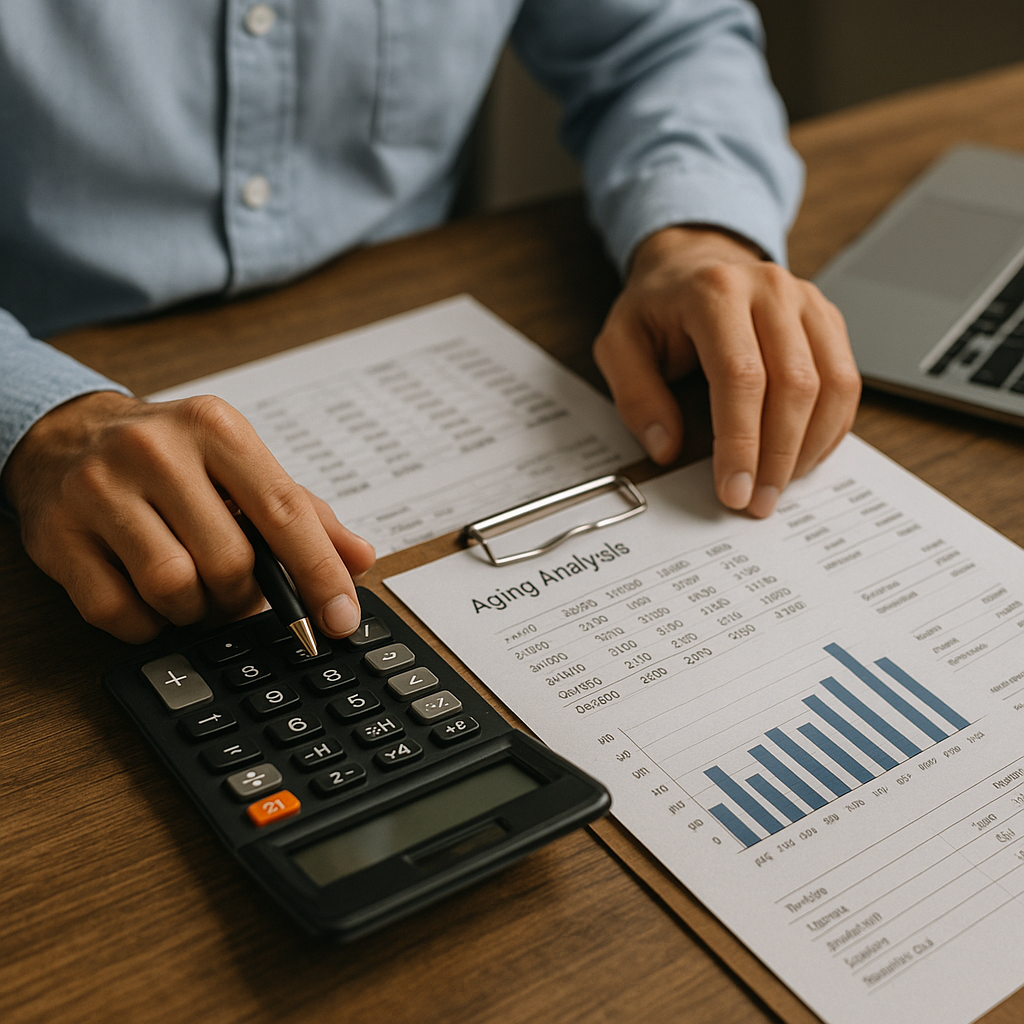
Aging analysis breaks down payables by how long they’ve been outstanding:
| Age of Payable | Amount (₹) | % of Total |
|---|---|---|
| 0 – 30 days | 12,00,000 | 60% |
| 31 – 60 days | 5,00,000 | 25% |
| 61 – 90 days | 2,00,000 | 10% |
| Over 90 days | 1,00,000 | 5% |
This table helps you spot which bills need urgent action and which suppliers may start charging interest or holding new orders.
Discrepancy Resolution
Sometimes, suppliers send invoices with errors, or you receive goods late or damaged. Quick discrepancy resolution involves:
- Verifying invoice details with delivery notes
- Communicating issues to suppliers promptly
- Adjusting entries to reflect correct amounts
Financial Controls and Compliance
Strong controls in accounts payable reporting include:
- Segregation of duties (one person approves, another pays)
- Approval workflows for payments
- Regular audits of the payables ledger
- Compliance with GST, TDS, and Companies Act reporting
Miss a step here, and you risk fraud, penalties, or failed audits.
Key Elements of Effective Accounts Receivable Reporting
Receivables reporting is about more than just sending invoices. Here’s what sets strong systems apart.
Invoice Tracking and Collections
- Issue invoices promptly after delivery or service
- Record payment status for each invoice
- Send reminders for overdue payments
- Reconcile receipts with bank statements
Receivables Aging Analysis
Like payables, receivables aging analysis groups outstanding amounts by how long they’ve been due:
| Age of Receivable | Amount (₹) | % of Total |
|---|---|---|
| 0 – 30 days | 8,00,000 | 40% |
| 31 – 60 days | 7,00,000 | 35% |
| 61 – 90 days | 3,00,000 | 15% |
| Over 90 days | 2,00,000 | 10% |
This highlights slow-paying customers and possible bad debts.
Discrepancy Resolution
If customers dispute invoices, raise debit notes, or claim goods weren’t delivered, you need a process:
- Match invoices with delivery receipts
- Address disputes quickly
- Update records after resolution
Financial Controls and Compliance
- Set credit limits for customers
- Use approval workflows for credit sales
- Regularly review receivables for possible write-offs
- Comply with GST, Ind AS/IFRS, and Companies Act disclosure requirements
Accounting Standards and Regulatory Requirements
Proper accounts payable and receivable reporting isn’t just best practice. It’s a legal and regulatory requirement in most countries, including India.
Indian Accounting Standards (Ind AS) and IFRS
- Ind AS 1 (Presentation of Financial Statements): Requires disclosure of payables and receivables in the balance sheet.
- Ind AS 7 (Statement of Cash Flows): Mandates reporting cash flows from operating activities, which depend on changes in payables and receivables.
- IFRS 9 (Financial Instruments): Covers recognition, measurement, and impairment of receivables.
- Ind AS 115 (Revenue from Contracts with Customers): Requires detailed tracking and recognition of revenue, closely linked to receivables.
Companies Act, 2013
- Mandates proper maintenance of books of account, including payables and receivables.
- Requires directors to confirm the accuracy of financial statements, including disclosures on trade payables and receivables.
- Section 143 requires statutory auditors to verify the existence and accuracy of these balances.
GST and Income Tax Implications
- Input tax credit (ITC) can only be claimed on GST-compliant payables.
- GST returns (GSTR-1, GSTR-3B) require reconciliation of outward and inward supplies, tied to receivables and payables.
- TDS provisions under the Income Tax Act affect payments to vendors and must be tracked in accounts payable reporting.
Audit and Disclosure Requirements
- Auditors check for proper aging analysis, provision for doubtful debts, and reconciliation of balances.
- Non-compliance can lead to audit qualifications, penalties, or even criminal liability for directors in some cases.
How to Build Effective Reporting Systems
Many companies rely on spreadsheets, but even small errors can snowball. Here’s a practical framework for reliable reporting.
Step 1: Standardise Data Entry
- Use accounting software or ERP systems for consistency
- Train staff to enter all invoices and receipts promptly
Step 2: Regular Reconciliation
- Match payables with supplier statements monthly
- Reconcile receivables with customer confirmations
- Check bank statements against receipts and payments
Step 3: Automate Aging Analysis
- Use software to generate aging reports automatically
- Review at least monthly (weekly for larger businesses)
Step 4: Set Approval and Exception Workflows
- Require manager approval for large payments or credit notes
- Flag exceptions, such as overdue or disputed items, for review
Step 5: Monitor and Report
- Share key metrics with management: days payable outstanding (DPO), days sales outstanding (DSO), overdue balances
- Use dashboards or scheduled reports for visibility
Step 6: Audit and Improve
- Conduct internal or external audits at least annually
- Adjust controls and processes based on findings
Common Mistakes and How to Avoid Them
Even experienced teams make mistakes in accounts payable and receivable reporting. Here are the usual suspects:
Ignoring Small Balances
Tiny unpaid bills or customer balances are easy to overlook. But over time, they add up and can cause reconciliation headaches or audit issues.
Not Updating Payment Status
Failing to mark invoices as paid or received leads to double payments, missed collections, or confusion during audits.
Relying on Manual Processes
Spreadsheets are prone to errors. Manual entry increases the risk of missing invoices, especially in high-volume businesses.
Weak Segregation of Duties
If one person controls both invoice approval and payment, fraud risk shoots up. Always separate these tasks.
Not Reviewing Aging Reports
Many teams generate aging reports but never act on them. Regular review is key to chasing overdue amounts or negotiating payment terms.
Practical Scenarios: Cash Flow Impact of Reporting
Let’s look at how proper reporting changes real business outcomes.
Scenario 1: Supplier Discounts and Penalties
A supplier offers a 2% discount if you pay within 10 days. Your accounts payable reporting flags this, so you pay early and save ₹20,000 on a ₹10 lakh invoice. If you miss it, not only do you lose the discount, but late payment could cost you extra in penalties or strained relationships.
Scenario 2: Identifying Bad Debts Early
Your receivables aging analysis shows a customer hasn’t paid in 120 days. Early detection lets you start legal recovery or provision for a write-off, reducing tax liability. If you miss it, you might overstate profits and get a nasty surprise at year-end.
Scenario 3: Managing Seasonal Cash Flow
A retail business sees a spike in sales (and receivables) during Diwali but must pay suppliers upfront. Detailed reporting helps plan for overdraft needs and avoid bounced payments during lean months.
Scenario 4: GST and TDS Compliance
Accurate accounts payable reporting ensures you deduct TDS correctly and claim the right GST input tax credit. Missing invoices or misreporting can trigger GST mismatches, penalties, or loss of credits.
Best Practices for Accounts Payable and Receivable Reporting
To keep your cash flow healthy, adopt these habits:
- Use reliable accounting software with built-in controls
- Train staff on correct data entry and compliance
- Review aging analysis monthly
- Reconcile ledgers with external statements (suppliers, customers, banks)
- Set clear approval hierarchies for payments and credit sales
- Document and resolve discrepancies quickly
- Regularly update management on key metrics
- Stay updated on regulatory changes (GST, Companies Act, Ind AS)
Technology Trends in Reporting
Modern businesses are moving beyond spreadsheets. Here’s what’s changing the game:
Automation
- Automated invoice capture (OCR, email parsing)
- Workflow tools for approvals and exception handling
- Automated reminders for overdue payments
Cloud-Based Systems
- Real-time access for distributed teams
- Easier integration with banks and payment gateways
- Better data security and audit trails
Analytics and Dashboards
- Visual aging analysis
- Predictive cash flow forecasting
- Early warning alerts for cash shortages or overdue payments
Integration with Tax and Compliance Tools
- Automated GST reconciliation and filing
- TDS deduction and reporting modules
- Compliance checks for Companies Act and Ind AS requirements
Frequently Asked Questions
What is accounts payable reporting?
Accounts payable reporting tracks all unpaid bills and obligations a business owes to suppliers or vendors. It includes invoice details, due dates, amounts, and payment status. This reporting supports cash flow planning, compliance, and financial controls.
How does accounts receivable reporting affect cash flow?
Accounts receivable reporting shows what customers owe your business and when payments are expected. Accurate tracking helps forecast incoming cash, spot overdue accounts, and plan collections, directly impacting cash flow management.
What is an aging analysis in accounting?
Aging analysis groups payables or receivables by the number of days outstanding, such as 0 – 30, 31 – 60, or over 90 days. This helps identify overdue payments, potential bad debts, and cash flow risks.
How can I improve invoice tracking for payables and receivables?
- Use accounting software for real-time entry.
- Match invoices with purchase orders or delivery notes.
- Regularly reconcile accounts with supplier and customer statements.
What are the main compliance requirements for accounts payable reporting in India?
Businesses must comply with the Companies Act, GST regulations, and Income Tax provisions. This includes accurate recording, timely TDS deduction, GST input tax credit tracking, and statutory disclosures in financial statements.
What is the impact of poor accounts payable reporting?
Poor reporting can lead to missed payments, late fees, supplier disputes, fraud risk, GST credit loss, and audit issues. It also makes cash flow forecasting unreliable.
How do I resolve discrepancies in accounts payable or receivable?
Investigate mismatches by comparing invoices with purchase orders and delivery notes. Communicate with suppliers or customers to clarify issues, then update records accordingly.
What is the difference between accounts payable and trade payables?
Trade payables are amounts due for goods or services purchased as part of core business operations, while accounts payable may also include non-trade obligations like utilities or rent.
How do accounting standards affect accounts receivable reporting?
Standards like Ind AS 115 and IFRS 9 set rules for revenue recognition, measurement, and impairment of receivables. Businesses must follow these for accurate financial reporting and compliance.
What financial controls should be in place for payables and receivables?
Controls include segregation of duties, approval workflows, regular reconciliations, credit limits, and automated alerts for overdue items. These prevent errors, fraud, and compliance failures.
Can automation improve accounts payable and receivable reporting?
Yes. Automation reduces manual errors, speeds up invoice processing, improves compliance, and provides real-time insights for better cash flow management.
What are DPO and DSO, and why do they matter?
DPO (Days Payable Outstanding) measures how long you take to pay suppliers. DSO (Days Sales Outstanding) tracks how quickly customers pay you. Both are key cash flow metrics.
Conclusion
Accounts payable and receivable reporting aren’t just accounting chores – they’re essential tools for real cash flow control. Done right, they help you spot risks early, avoid compliance trouble, and make smarter business decisions. Ignore them, and you’ll always be guessing where your money went. For most businesses, strong reporting is the difference between steady growth and constant cash stress.